Perpetuating the use of radical knowledge, subversion, frugality, and creative expression to empower personal healing. Created by, Kathy Fitzpatrick & Lucinda Hodges.

Monday, May 28, 2012

Happy Birthday, Rachel Carson, The Gentle Subversive


Book By, Mark Hamilton Lytle, Oxford University Press 2007
Book Review, By Lucinda Hodges


"Each person has the right to be secure in his own home against
the intrusion of poison's applied by other persons."
Rachel Carson, May 1963

What is most striking to me about Rachel Carson, having just read Lylte's concise profile of her life, is how frail her health was during the time she was writing Silent Spring, how nearly the infamous book was not written at all, and how closely Carson's illnesses mirrored what would today would be described as an environmental illness.

Any person coping with the daily struggles of balancing work, family, and health problems will be inspired by Mark Lylte's portrayal of Rachel Carson. His biography brings her to life and reveals how she dealt with ordinary obligations while accomplishing extraordinary tasks that have withstood the test of time. His book is a quick read, well referenced, and divides Carson's life into seasons: spring, summer, fall, and winter. I think she would have approved.

Clearly, Rachel Carson was an uncommon woman. Born on May 27th, 1907, she defied the conventions of her time and choose a career in science. She never married. Her early books about ecology and the sea earned her national recognition. But, it was her final book dubbed the, “Poison Book,” by her best friend and confident, Dorothy Freeman, that earned her the legacy as the, “Mother of the Environmental Movement.”

Author, Mark Hamilton Lylte, writes, “The more I learned about Carson --- The environmentalist, career woman, scientist, animal-rights activist, faithful daughter and beloved aunt, female role model, devoted friend, gifted writer, and political dissenter --- the more interesting she became. Her struggle to write Silent Spring while fighting against cancer was inspirational. The battle she waged against the male dominated science establishment was truly heroic.”

And Carson was a true heroine. She devoted the last years of her life to personally caring for her invalid mother, adopting her five year old nephew who was orphaned when Carson's sister died suddenly of the flu, and somehow finding the time in between these challenges to research and write Silent Spring. Throughout her life, she always was able to meet her personal and career responsibilities in a manner that was consistent with her convictions and sense of ethics. No small feat.

On June 28, 1958, Carson writes about her health in a letter to her dear friend Dorothy, “we can't lay it all to that my dear, for I was miserable much of the time in Maine last year, even when doing practically nothing.” Carson's letter to Dorothy indicates that she was ill and suffering long before any official diagnosis of cancer. Later on, “The flare-up of a recurring duodenal ulcer forced her into bed for several weeks.... though on many days she could barely leave her bed and wondered “whether the Author even exists anymore.”” Lytle writes, “Despite her intention to work quickly, she could never overcome the limitations imposed by her family and her own mounting health problems.”On December 2nd, 1958, Marion Carson, Rachel's mother, died with Rachel by her bedside holding her hand.

In March,1960, Carson was diagnosed with breast cysts and underwent a mastectomy. At the time, her doctor chose to hide the true nature of her health from her and told her she did not have breast cancer, merely benign tumors. Only later in November did she learn the truth when, “she discovered a hard swelling on her left side... her doctor recommended radiation treatments. Immediately after, she came down with the flu that left her bedridden for two weeks. What ensued was a train of woes worthy of Job. A minor bladder infection gave way to blood poisoning. Antibiotics brought on painful phlebitis that left her knee and ankle painfully swollen. Unable to stand, much less walk, she was confined to a wheelchair. For over a month writing was impossible.”

In typical Carson fashion she rallies and brings the focus of her mind to bear upon her book, Silent Spring. Lylte writes, “With her project on track, Carson suffered what she considered, “the most frustrating and maddening,” of all of her ailments. In late November she contracted a case of severe iritis, an inflammation of the irises in her eyes. For two weeks she was nearly blind.”

Silent Spring, was at last published in the summer of 1962. Her book created a firestorm of controversy. Despite her failing health Carson met the firestorm with candor, grace, and the firmness of her facts. She testified before Congress on, June 4th, 1963, “I hope the government will fully support research on new methods of pest control in which chemical use will be minimized or entirely eliminated. One of the outstanding values of biological controls for insect pests is that they are specifically adapted to a particular species or group of species. We must search, not for a super weapon that will solve all problems, but for a diversity of options, each precisely adjusted to its task.”

Mark Lylte concludes his book on Carson with these insightful words, "Rachel Carson grew up in an America whose leaders preached that the nation had achieved greatness by conquering and controlling nature. How then could they accept a woman who challenged them to be respectful of nature, to recognize the limits of their own understanding, and to seek out the mystery and wonder of the unknown? They were, after all, practical men. Rachel Carson urged them to be men of vision.” 
 
Rachel Carson died at home on April 14th, 1964, at the age of 56.


To learn about more about the legacy of Rachel Carson's work check out these websites:

Saturday, April 21, 2012

Thoughts on Subversion, By Kathy Fitzpatrick


"Using one plant at a time is a subversive act, a reclaiming of simple health care."
-Susun Weed 


This summer i took my health into my own hands.  And with these hands
make my own medicine, work the rows between my vegetables, nourish and tend the food that in return nourishes me back to health. I am empowered. In so doing i am no longer being ruled  by the medias' "intelligent" sabotage, i am opting out of a no longer working medical system.  I am no longer part of a population that has been dumbed down by glossy magazine ads and slick media presentations or the lies perpetuated by the government, FDA and pharma/chema companies. 

Everything in my healing protocol is an act of subversion. Something as simple as my morning jar of nettle infusion, a liver flush and coffee enema, the four gallons of kombucha blissfully brewing on top of my fridge, the kim chi, and sauerkraut, chopped up and fermented, bursting with vitamins, a new batch of kefir grains, an ion cleanse foot bath.  All are subversive, because i do them myself, for myself, without the support or permission of the medical industrial complex.   

Today more than ever,  these simple acts of survival are perpetuating the use of radical knowledge, subversion, frugality and creative expression.  There is a satisfaction from crafting my own medicine, from growing my own food whether it's sprouts on the kitchen counter or food in my backyard garden.  There is a feeling of empowerment that can be used to promote a collective awareness against the tactics used by modern mega corporations.  There is deep pleasure in going against the political grain, of following the beat of my own heart instead of the beat of an institution that is failing us.

We have a right to time honored simple healing.  A right constantly under assault against indigenous people all over the world.  An assault that takes place in this country against any practicing doctor or healer who dares speak out against those in power.  Good health isn't just for the rich or those lucky enough to have insurance.  It's for everyone.  When we take our health back into our own two hands, where it belongs, we take back a part of the earth.  And as we heal, so heals the earth.  


Spring Time Rituals, By Kathy Fitzpatrick


Science has never drummed up quite as effective 
a tranquilizing agent as a sunny spring day.
W. Earl Hall


It's spring! We have made it through the darkness of winter and into the light. This is the time to renew hopes and dreams, honor new growth and open ourselves to the unlimited possibilities and miracles of the season. As we take time to honor the changes in the earth we see that even though the season is the same year after year, we are not the same. We have grown and with growth comes change. Spring is an invitation to plant the seeds of intention. Spring is a dance where we plant the seeds to cultivate our lives. It's a time to clear out the old and bring in the new. The Equinox is a time to get rid of the old beliefs that weigh us down and create barriers to healing. It's a time to bring balance into our lives, eat fresh green plants and celebrate the rebirth of earth!

Spring is a time to let go of the control we try to have over our lives and just let go! It's a time for spontaneity, to let the child in you come out to play. Here are a few simple spring rituals ......


1. Create a spring altar by collecting bits of nature to bring inside the house to enjoy.
 

2. Start a journal.


3. Spend more time connecting with the earth, start a garden whether it's in a actual plot or in containers.


4. Simplify your life, clear out the clutter.
 

5. Make appropriate dietary changes. (see recipe below for a refreshing spring beverage)
 

6. Enjoy a bath with sea salts.


7. Renew or begin a daily mediation practice.


8. Begin a daily 15 minute ritual of yoga.


9. Indulge in a "do nothing" day.


10. For increased health and vitality discover your plant ally, it's probably growing right outside your door!

Outside Looking In, A Reading by Kathy Fitzpatrick


Who are you? 

I am the one that forces you to keep your distance.  I am the one who keeps you away from your family.  I am the one that keeps your friends away because it's too "difficult" to be around you.  I am the one who tests your patience.  I am the one that ebbs and flows.  I am the one only you can feel and  no one can see.  I am the parasite that came to suck the life out of you.  I am the one who makes people think you're crazy.  I am the one who changed the course of your life, I am your new spiritual path. 

What do you have to give me? 


After a lifetime of speaking up for others I force you to speak up for yourself in order to survive.  I give you the gift of time for creative pursuits and time to enjoy your home and garden.  I have taken away your old life as a rat on a  tread mill and have given you large expanses of time to be.

What do you want from me? 

I want you to speak up for yourself.  I want you to know when people lay their trip on you it's really all about them.  I want you to question everything and then go deep inside yourself for answers.  I want you to stay away from energy vampires and people who live in fear.  I want you to rest, eat well, exercise, and to continue creating new life out of the rubble of your old life. 

Is there anything else you have to tell me? 

Yes, i am not the enemy and chemicals aren't the only thing that are toxic.  People can also be extremely toxic, be wary of those who are mired in a life of fear and implement censorship.

How will I remember? 

Everytime you enter a space and have to leave you will remember.  When you're around family or  friends or loved and have to leave because someone "forgot", you will remember.  Whenever someone says it's "all in your head" you will remember. 

An Interview with Kathy Fitzpatrick about her new enterprise, Empowered Goddess


Attitude is everything so you might as well have a good one!
Kathy can you share with our readers what you have been doing to improve your health while Pariah, A Healing Journal has been on hiatus? On August 31st i completed 92 days of a 92 day juice feast.  According to David Rainoshek, MA, juice feasting "isn’t about abstinence of solids. It’s about an abundance of enzymes, vitamins, minerals and protein in liquid form." Juice feasting is a way to allow the body "to cleanse, rebuild, rehydrate and alkalize by drinking 1 gallon or more of freshly made juices each day of the feast".  It was an incredible, life altering, health promoting experience, really the ultimate urban vision quest. Everyday my body was flooded with an abundance of raw living enzymes and all the vitamins, minerals and proteins it had been missing.  I never once felt hungry because i was juicing between 10-15 pounds of raw organic vegetables and edible weeds on a daily basis. My energy increased exponentially after the 4th day, gone were the days of coming home from my part time job and crashing, there was life after work!  Along with the daily juices i also drank a daily quart of a drink called "the master cleanse", took liquid B-12, MSM, chlorella, hemp oil and when the urge to chew came munched on bee pollen. I also did coffee enemas [not daily], ion cleanse foot baths, a parasite cleanse, body brushing, daily detox showers and used a zapper. To some this may seem over the top, extreme even, but i've always been one to push just beyond the edge of my limits in order to open myself up for the next thing.  In truth, without even knowing it, i had been working toward this feast for a very long time by creating gradual and consistent changes in my diet with the idea of transitioning to raw foods. I am now doing a whole food diet with an emphasis on raw food and have transitioned from juice to green smoothies and the most amazing energy rich food! Which of course means spending lots of time playing in the kitchen creating all kinds of wonderful raw feasts. It's a blast and the increase in my over all health and well being are so amazing i can't possibly begin to express it. And to celebrate, i begin Feldenkrais sessions.
 Feldenkrais Method
Juice Feasting
Raw Reform
Emax Health

Kathy I know your friends have asked, what took you so long to create your own website and showcase your unique and eclectic talents. Can you tell us what inspired you to finally create the Empowered Goddess website? 

Hmmmm, that's funny but you know what they say...."other people's opinions are none of my business!"  The simple reality is, until i did it i wasn't ready.  And truthfully, i've been working on it for a very long time, but it was "inside me" and now it's "outside."

Where does your passion and commitment for taking your health into your own hands come from?

That's easy, frustration with the western model of medicine. After years of knowing something wasn't right and not getting answers i took my health into my own hands and became my own doctor. And so began the process of experimenting with different methods and modalities and fine tuning the nutritional aspects of healing. I became interested in learning about what others have tried but at the same time was not at all interested in emulating them. We are all wonderfully unique, what works for someone else may not work for me. My rule of thumb is, if it doesn't resonate with my own innate wisdom, i don't do it.
 
In spite of illness, in spite even of the archenemy sorrow,
one can remain alive long past the usual date of disintegration
if one is unafraid of change, insatiable in intellectual curiosity,
interested in big things,
and happy in small ways.
 
Edith Wharton. 
My commitment and passion comes from REmembering good health and knowing it's my birthright along with a deep rooted refusal to settle for poor health. It also stems from a desire to find economical ways to improve the health i have that transcends the traditional western model. Good health doesn't require health insurance or a doctor, of any kind, other than yourself. There are simple, every day things, that can and do make a difference. It's work, there isn't a magic bullet, however working toward providing the body with what it needs to heal is an incredible act of self-love and discovery.

That is not to say i don't ever go to a doctor or think doctors are bad, i have simply made a conscious decision to only work with those willing to work as a partner in the process. I have a right to be listened to, respected and heard, it is after all my body, my time and my money, i will not squander my resources!
You are the co-creator of this E-Zine. Pariah's mission is, "Perpetuating the use of radical knowledge, subversion, frugality, simple health care and creative expression to empower personal healing from chronic illness and injury." For you, those are not just words on a website, they are a big part of who you are and how you live. How will the Empowered Goddess website be an extension of these ideas and beliefs?  
You know, i'm sure all those things will be included in some way but it's too soon to "know" the how of it. There is a natural progression that happens whenever something is created. Hopefully, as it evolves, the end result will be a lively site filled with a natural flow of information that is as practical as it is thought provoking and everything in between.  


Sunday, April 17, 2011

Recipe for a Good Life

Last night I had a wonderful conversation with a good friend. In the course of an hour we both laughed, shared our woes, discussed our creative endeavors and when it was time to say good bye we were in brighter moods -- just as it should be. As we were winding down the evening, she said to me, "If we were neighbors, we would both have messy homes, but beautiful gardens." 

Her words were spontaneous and they resonated. It dawned on me how little we require to create a good life in this world. All we really need are the right ingredients combined together at the right time. Elements as basic as earth and sky; shelter, kinship and food. It is the understanding neighbor across the fence who has a good heart and helping hands. Or a kind soul to share a sunset, from the quiet of the back porch, after a long summer's day. 

It is the people who care enough to be present in our lives year after year, through the joys and the heartaches, whose opinions we grow to trust and count upon that make a good life. We all need people there in the moment with us to make our own recipes work and to prompt us on where our priorities lay. Just like my friend did for me, with her throaty laugh and earnest words, reminding me friends matter, nurtured gardens grow; dust bunnies and dirty dishes will always wait for us.


Lucinda Hodges

Tuesday, March 29, 2011

Homemade Carrot & Ginger Soup

I prepared a fresh batch of ginger soup from a recipe I found on Reed's Inc. Blog and it is delicious! It was very easy to make. This is a soothing, nutritious soup, that is easy on the palette.

I have always liked the combination of ginger, carrots and oranges. Since I frequently juice fresh, ginger and carrots, this is the perfect soup to make on a day I juice, because I can use the ginger/carrot pulp from the juicer to make this soup. 

A few other observations: I thought 1/3 cup of fresh ginger might overwhelm the soup, but it doesn't. In season, you could easily substitute butternut squash for the carrots, and sweet red peppers would add a nice flavor to this soup. The cream adds richness but you don't need heavy cream for this recipe to work. 

Bowl of Ginger Soup, ready to eat.

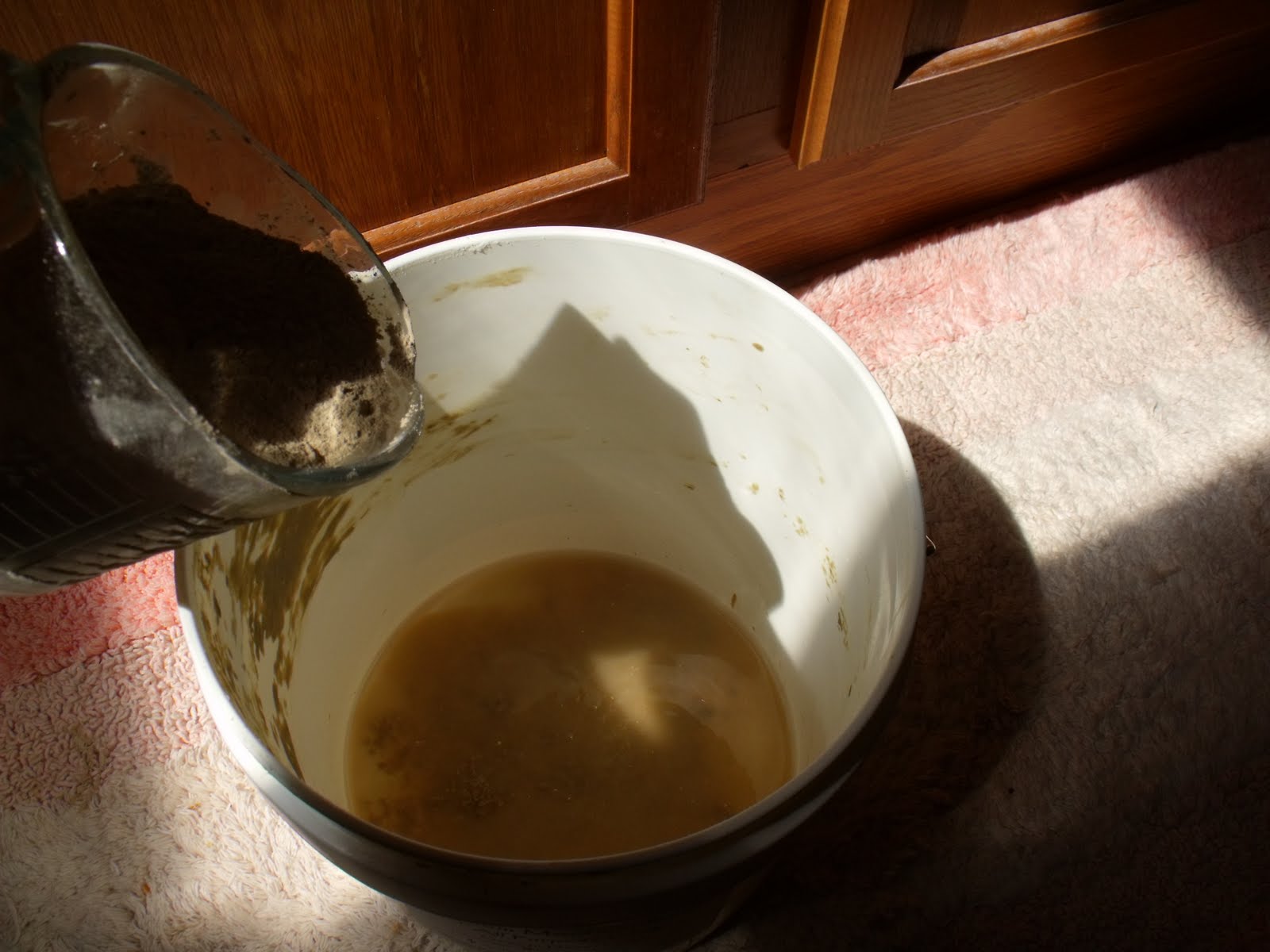
I also changed the recipe slightly. While I sauteed the onions I placed the ginger and carrots together in my food processor and pulsed them, rather than mince them by hand. Once the onions were translucent I added the carrot/ginger mix, then the chicken stock and simmered for 15 minutes, turned off the heat and let it sit for another 15 minutes. Then I poured the mix into my food processor, gave it whirl, put it back in the sauce pan and added the fresh orange juice I had made in my juicer. That was a nice touch to have fresh squeezed orange juice. A dash of cinnamon, a dash of spike, a little cream and it was done! 


Ingredients
2 tablespoons vegetable oil
1/2 cup minced onion
1/4 cup minced peeled fresh ginger
3 cups (or more) chicken stock or canned low-salt chicken broth
4 cups sliced peeled carrots (about 1 1/2 pounds)
1 cup orange juice
1/2 cup half and half
1/4 teaspoon ground cinnamon
1/4 cup matchstick-size strips peeled carrot (for garnish; optional)
1 tablespoon matchstick-size strips peeled fresh ginger (for garnish; optional)

Preparation
Heat oil in heavy large saucepan over medium-high heat. Add onion and 1/4 cup minced ginger and saute until onion is translucent, about 5 minutes. Add 3 cups chicken stock and 4 cups sliced carrots. Cover and simmer until carrots are tender, about 30 minutes.

Working in batches, puree mixture in blender or processor. Return soup to saucepan. Mix in orange juice, then half and half. Cook over low heat 5 minutes. Mix in ground cinnamon. Season soup to taste with salt and pepper. (Can be prepared 1 day ahead. Cover and refrigerate. Bring to simmer before continuing, thinning with more stock if necessary.) Ladle soup into bowls. Top soup with carrot and ginger strips, if desired, and serve.


Bon Appetite!

Lucinda

Monday, March 28, 2011

Frugal Travel


How to Vagabond Around America on Five Dollars a Night or Less

Flathead Lake,  Montana


"The world is a book; and those who do not travel read only a page."

Saint Augustine


  I love to travel, especially when I can enjoy it in the time honored tradition of the vagabond: with few restrictions, free to wander, following my bliss. 

But, like many people I am constrained by physical and financial limitations which can make getting around America a real challenge. Over the years I have discovered my passport to vagabonding on the cheap is an America the Beautiful – 
National Parks and Federal 
Recreational Lands Pass.

The Access Pass is free to all disabled or impoverished Americans. It is a lifetime pass to the Federal Park System. To obtain your own Access Pass simply apply in person at any
Federal Park, Forest Service or Recreational Area. Bring along your basic documents; a letter from your doctor or from Social Security will suffice. For complete details look here.

I have been using my Access Pass for about twelve years. With your own Access Pass you can enter all of the National Parks in America at no cost. That benefit alone saves you $25.00 in entrance fees every time you visit a National Park. Once you are inside the National Park, or any pubic lands, the Access Pass will save you 50% on camping fees. Currently camping fees range from $10.00 to $50.00 a night depending on the amenities offered. A wilderness or primitive campsite, which provides a place to park, picnic table, tent area, running potable water and no flush latrines will cost a mere $5.00 a night with your pass -- now that is my idea of frugal lodging and your room is sure to come with a view.

In addition, most state parks will honor the Access Pass and give you the same 50% discount. Since state parks are generally less expensive than the federal parks a primitive camp site fee in a state park can be as little as $3.00 or $4.00 a night, or even free, depending on the state.

So, if you are ready to sing the song of the open road, now is the time to get equipped with an America the Beautiful Access Pass, a reliable vehicle and some basic camping gear. Your great escape awaits you!

Vagabonding Basics:
Lake McDonald, Glacier Park
With 58 National Parks in America, encompassing 84 million acres of land, along with 190 million acres of Forest Service land, divided into: 155 National Forests, 9 National Grasslands, 1 National Tall Grass Prairie, and 2,387 campgrounds  -- there is vast array of camping and recreational choices for the frugal traveler. And this is just within the federal lands system. For example, New York has 5,344 campsites in the state park system and camping is free of charge to everyone with an Access Pass. So, don't overlook state parks as a resource when researching your next excursion. But, ultimately, the best way to determine which of these options is right for you; is to know your purpose for traveling and be realistic about your limitations.

For instance, i
f you are severely, chemically sensitive and need to avoid chemical exposures the National Forests are the place for you. Remember, the National Forest is administered by the United States Department of Agriculture. These lands are managed as multi-use lands and no fee camping is permitted for ten days at a time. So for a frugal traveler, who prefers isolation from other campers, the National Forest with close to 200 million acres, offers nearly limitless possibilities.


Using the National Forests

These lands are your National heritage, maintained with your tax dollars, and are, essentially, free for all Americans to enjoy regardless of income. If you do decide to camp on National Forest land, you will be giving up the amenities of a campground, but you are gaining open space, well away from people, their campfires and other potential environmental irritants.


There are many informative websites which will help you determine where you want to camp and recreate on the National Forests. But, once your vehicle is packed, and you are on the road, always drop in at the Regional Forest Service Office or local Ranger Station. Nothing replaces time sensitive, firsthand, knowledge of a locale. These outposts are generally staffed by friendly, informative people. It is their job to make your stay on the National Forest a good one and most Forest Service employees are more than happy to oblige. To assist them in assisting you, be specific when you ask questions. If you want to find a good place to camp, which is close to a paved road and no more than ten miles from a grocery store then be sure to state that. Without specifics they can't know what your looking for.

You also want to ask about other activities in the area that you may want to avoid. Are herbicides being sprayed? Are there cell towers or high voltage power line encroachments? What about cattle grazing? Is there logging or oil and gas exploration in the area? Are all terrain vehicles permitted? Are there any upcoming events that will be held on the National Forest that could impact your plans?

And don't forget to ask about the activities you want to enjoy while camping. If it is your heart's desire to pick berries, harvest mushrooms, wild craft herbs, try your hand at fishing, or float the river, ask if you need a permit and where to go on the forest lands to enjoy these pursuits. They will provide you with maps, brochures and permits -- most of which will be free, or for a very nominal fee.


And last, but not least, find out if there are any current problems with wildlife, fire restrictions, flood warnings, or road closures in the vicinity. If you are planning to camp alone, inform the rangers of that fact and what your itinerary is. And use common sense; if you are allergic to mosquitoes don't plan to camp a week in the Mosquito Creek Valley. Pay attention to the flora, fauna, climate and geography where you plan to camp. A little, prudent, preparation will make your vagabonding experience much more enjoyable.


National Parks Rock!

Our National Parks are the crown jewels of our natural world. Unlike, the National Forests, the Federal Parks are operated by the Department of the Interior, with an entirely different purpose and mission. The National Park Service's mission is to conserve nature,
Inside Lake McDonald Lodge
protect wildlife and maintain the historic objects within the boundaries of each National Park. To accomplish this, the National Park Service restricts how we are able to utilize the land. For the frugal traveler, this means camping outside of designated campgrounds is strictly prohibited and fervently enforced. 

There are other significant differences in experiencing the National Parks compared with the National Forests. The Parks are treasured destinations for people throughout the world. Every National Park I have visited has at least one, grand, historic lodge. These lodges are typically the focal point of human activity in the park and are magnificent examples of rustic architecture - a sight to see - as much as the nature and wildlife surrounding them. They also boast enormous fireplaces which are used year round. So, if you are affected by wood smoke, sight seeing in these areas is going to be problematic. The same will be true for the campgrounds: in the summer season each campground will be full to capacity, reservations are highly recommended and there will be a camp fire burning at nearly campsite. So, if you have asthma, which is triggered by wood smoke, the National Parks are going to be troublesome. You will be much more comfortable day tripping through the Park and camping outside of the Park boundaries in the National Forest.

Even so, the National Parks are truly a vagabonders delight. Designed to facilitate your enjoyment of the wonders of nature, by providing visitor and interpretative centers, access to historic sites, wildlife viewing, while also catering to your desire for creature
comforts. If you are in need of a hot shower, a gourmet meal with a fine wine, or simply an evenings entertainment,  the National Park Service, provides all of these conveniences, via private concessionaires. There are also outdoor amphitheaters offering, evening slideshows, short films, sing-a-longs and even cowboy story telling or Native American cultural opportunities.

Our National Park's excel at blending the best of both worlds. You won't be bombarded by constant advertising or televisions blaring cable news inside the confines of a National Park. You will see families playing board games, reading and relaxing on rustic terraces and cavernous hotel lobbies with expansive views. And, to be true to their mandate; economy rooms, cabins and family style buffets are offered in every National Park. So, if you can afford a night at the Motel 6, you will be able to afford a night in one of America's grand lodges. There is no doubt, our Parks provide a unique cultural and social scene all their own. Something, I firmly believe everyone should experience at least once in their lifetime.

So, if the call of the wild has roused your spirit of adventure and you are ready to enter into the world of frugal traveling be sure to bring along a free spirit, an eager heart, and an open mind. Be receptive to new people and experiences, while remaining flexible to what poet Walt Whitman calls, "the rudeness of the Earth."  In this way, you will discover a whole new traveling experience beckons you to come forth and -let go- deep within the heart and soul of mother nature.


As of the spring of 2011 the Access Pass is still available, but Congress has considered eliminating the program. Thanks to public out cry the program has survived. But, if you want an Access Pass, I would get one ASAP.

Article and photos by Lucinda Hodges

Poor Man's Chelation


Not long ago I discovered a couple great tasting recipes for "poor man's chelation" using cilantro. Studies have found that fresh cilantro is able to remove heavy metals, including mercury, from the central nervous system. Cilantro, also known as coriander or Chinese Parsley, is a common spice used in Middle Eastern and Mexican cooking. Both the leaves and stems can be used in the following recipes. You need to eat at least 2 two teaspoons of pesto everyday for three weeks. This is enough to remove toxic metals like lead, mercury and aluminum from your body. Instead of the pesto you could also toss fresh cilantro into a fresh salad or homemade salsa.

In addition to the cilantro you may wish to consider taking chlorella. 1 gram = 4 tablets, 3-4 times a day. Chlorella is an anti-viral containing various peptides. It is known to bind to all known toxic metals, even environmental ones like Dioxin. It is easily absorbed, restores bowel flora and strengthens the immune system. Cilantro will carry out the heavy metals, while the Chlorella works to take care of what's been released by carrying it into the urine and out of the body. Chlorella needs to be taken thirty minutes before ingesting the pesto.

As with any detox it is important to give your body lots of good support, be sure to keep up on your vitamins and minerals, especially Vitamin C for immune support. Please note, Vitamin C needs to be taken as far away from the Chlorella as possible, such as after meals. The addition of raw walnuts and brazil nuts to your diet will provide a natural replacement for the Magnesium, Zinc and Selenium that will be chelated. Be sure to stay hydrated by drinking plenty of filtered water. If at any time you experience a reaction, stop immediately, it’s a sign your body is chelating too quickly.

Cilantro Chelation Pesto
2 cups packed fresh cilantro [coriander, Chinese parsley] [vitamin A]
2/3 cup flaxseed oil
4 cloves of garlic
1/3 cup brazil nuts [selenium]
1/3 cup sunflower seeds [cysteine]
1/3 cup pumpkin seeds [magnesium]
4 tablespoon lemon juice [vitamin C]
2 teaspoons of dulse powder
sea salt to taste
 
Process the cilantro and flaxseed oil in a blender until the cilantro is chopped. Add rest of ingredients except of sea salt and mix until finely blended into a paste. Add a pinch of sea salt and blend again. Store in dark glass jars if possible. It freezes well, so purchase in season and fill enough jars to last thru the year. Cilantro has been proven to chelate toxic metals from our bodies in a relatively short period of time. Combined with the benefits of the other ingredients, this recipe is a powerful tissue cleanser. Two teaspoons of the pesto daily for three weeks is purportedly enough to increase the urinary excretion of mercury, lead, and aluminum, thus effectively removing these toxic metals from our bodies. Consider doing this for 3 weeks at least once a year. The pesto is DELICIOUS on toast, baked potatoes, and pasta.

*Note: one bunch of cilantro is equal to approximately 2 cups

Cilantro Pesto
1 cup fresh cilantro leaves
2 tablespoons olive oil
1 clove of garlic
1 cup almonds or other nuts
2 tablespoons lemon juice

Process cilantro and olive oil in a blender or food processor until the cilantro is chopped. Add remaining ingredients and process to a lumpy paste. [you may need to add a touch of hot water and scrape the sides of the blender.] You can change the consistency by altering the amounts of the olive oil and lemon juice, but keep the 3:1 ratio of oil to juice. [freezes well, so make up plenty]


Kathy Fitzpatrick

Thursday, March 24, 2011

Making Salt

Ghandi and the 1930 Salt Satyagraha: A Spring Walk Worth Remembering

Mahatma Gandhi once walked 240 miles to make salt at the edge of the Arabian Sea. It was an act of treason. A way to subvert British rule. It was classic civil disobedience: a simple, deliberate act of life sustaining labor designed to thwart an unjust rule of law. 

Every person requires salt to live and yet it was illegal in 1930′s India for any Indian to harvest salt from the sea. Salt was taxed and sold only by the British. By controlling a necessity of life the British were able to exert control over the majority they ruled.

Gandhi understood the power of simplicity over the power of tyranny. He wielded that power with grace and precision. He made salt. He spun his own cloth. He founded an ashram. He walked his talk, and ruled a nation. There was power in reclaiming HIS right, to sustain HIS life, in HIS own way.

As almost any chemically injured person will tell you the very first thing we lose with this disease is control. The loss of power often follows the loss of control, and if we lose the ability to work, medical bills mount as assets dwindle. Toxic homes push the most severely effected of us outside to live alone in cars, or worse. It ain’t pretty and yet somehow against all odds most of us — not all — but most of us, survive to eventually find some semblance of stability in our lives.

So, how do we do it? How do we fight back and reclaim our lives? There are as many answers to that question as there are chemically injured people. We each find our own chosen way.

I believe there is a bit of Mahatma Gandhi in everyone of us. Gandhi made salt. Some of you make soap, create jewelry, gaze at the stars, carve wood, write poems, practice photography, quilt, paint, build websites, write legal briefs, or simply listen and provide vital emotional support. 

These are all equivalent acts of simplicity, creativity, frugality and subversion. One act no greater than the other. Each as potentially empowering as The 1930 Salt Satyagraha, which began on March 12th, and ended at the Arabian Sea on April 6th, 1930. A spring walk worth remembering.


Lucinda Hodges
originally published in 2006, Pariah, A Healing Journal

Tuesday, March 22, 2011

Quercetin, Another Super Antioxidant

So, there is truth in the old adage, an apple a day keeps the doctor away.  I have been reading about quercetin in the book, Natural Detoxification, The Complete Guide to Clearing Your Body of Toxins, by Dr. Jacqueline Krohn. Quercetin is one of those marvels of nature. It can't be manufactured in a factory, it is grown in our orchards, kissed by sunshine and blessed by rain. It is the source of that wonderful color in apples, cherries and grapes. And, it is a powerhouse for good health.

But what the heck is quercetin in terms of science and human health? As I have learned from my reading, it is a plant based flavanoid, or bioflavanoid, which means it is a plant pigment. Flavanoid's are the substances which give plants color, they are frequently found in the rind or skin of fruits and vegetables. They are also common in teas, dark chocolate and wines. Quercetin is also produced in pineapples, broccoli, green peppers Italian squash, red and yellow onions, tomatoes, cayenne pepper, garlic.

I started taking quercetin as a supplement about a year ago for its anti-inflammatory and anti-histamine effects. But, I had no idea it was such a powerful antioxidant until I read this in Dr. Krohn's book, "One of the most powerful anticancer substances discovered to date, quercetin prevents damaging changes in the cells that initiates cancer. It also helps inhibit the spread of cancer cells. In addition, quercetin keeps blood from thickening and forming clots. The pain-promoting inflammatory substances that are produced in the the body by rheumatoid arthritis and colitis are blocked by quercetin." Here are some more factoids from the book: 

Quercetin Aid to Detoxification

  • extremely potent antioxidant
  • inhibits the production of free radicals
  • accelerates the production of detoxifying enzymes that rid the body of carcinogenic toxins
  • interferes with an enzyme that neutralizes cortisone, the natural anti-inflammatory produced by the body
  • a powerful antihistamine
  • helps protect and potentiate vitamin C
  • prevents free radicals from oxidizing LDL, the "bad" cholesterol
  • prevents nerve, eye and kidney damage in people with diabetes by blocking the accumulation of sorbitol.

The recommended dosage is 400 mg., between meals, two to three times a day.


Lucinda


Melatonin: Master Hormone & Powerful Antioxidant


~Melatonin is released from the "seat of the soul" in the center of the brain. 

~Melatonin secreted by the pineal gland in the brain acts as an endocrine hormone. 

~Melatonin is also produced in the retina and GI tract.

~Marijuana circulates melatonin in our bodies.

~Melatonin reduces oxidative stress and is a free radical scavenger.

~Melatonin stimulates antioxidant enzymes in the brain and the synthesis of glutathione.
~Children born to older Mom's may be born deficient in melatonin. 

~Melatonin strongly influences the immune system by preventing infections and cancer. 
 
~Anemia may respond to taking doses of 10 mg or higher each night.

~Melatonin may prevent memory loss and Alzhiemer's by preventing amyloid deposits in the brain and neuron death.  

~Melatonin has a synergistic effect on other antioxidants and will enhance the function of vitamin's A & C.

~Melatonin improves thyroid function in perimenopausal women.

~Melatonin is effective in treating Seasonal Affective Disorder.

Need to know how much melatonin to take to get a good night's sleep? Begin with a dose of 3 mg, or whatever dose you are already accustomed to and take it about 30 minutes before bedtime. Then double the dose each evening until you are sleeping through the night. Stay at that dose. If you are feeling a hangover affect in the morning taper back one dose.


Sweet Dreams,


Lucinda Hodges


I retrieved many of these facts from an article, Melatonin Marvels, written by Dr. Ramsy NMD. Originally posted on Dragonfly Dreaming, Two Sisters Blogging

Friday, February 11, 2011

Making and Using Native American Medicine Bundles and Bags


Symbols of connections,
With allies of the earth.
Medicine to heal us
And give us rebirth.
Talents to honor,
Abilities to praise,
Strength and compassion
Guide our Medicine ways.
By Jamie Sams


For generations Native American Indians have used traditional medicine bundles and bags. Each bundle and bag was assembled and passed on according to the reason for its creation. Some were handed down from warrior to warrior, others from shaman to shaman. These medicine bundles and medicine bags became living histories of Native American people, their clans and their experiences across generations.

Adapting this Native American tradition to contemporary life can be a meaningful way to strengthen our own inner intuition and build strong bonds with extended family. A way of retaining memories for ourselves and lending positive influence to the lives of those we care about and want to connect with. And of course, a source of strength for our own personal healing.

Making your own personal medicine bag
A personal medicine bag is for you alone and should not be shared as a whole with others. The idea is to place items in a small pouch or bag over time that have meaning to you: a shell you were attracted to on a sunset stroll on the beach; a seed pod from your favorite shade tree; a button from a prized dress. Items may be individually wrapped in cloth or leather to protect and preserve them. The bag does not need to be a traditional leather bag and should be kept in a place that is all your own. A small pouch can be worn or carried with a chosen item from your personal medicine bag. Over time you will develop a sense of when and why an item belongs in your personal medicine bag.

Making Medicine Bundles
Medicine bundles can be personal for your own use, or made for a particular purpose and passed on. Again, the bundle does not to be made of leather and traditional materials. Any valued piece of cloth folded together and tied with a ribbon will do. Reusing the lining from a worn winter coat or sewing pieces of favorite material together for a bundle are good choices. The idea is to use what is already around you and not buy new items. I like to use river willow branches and fold cloth over the branches, tied with bits of ribbon or strips of
leather, to give the bundle shape. Willows are plentiful where I live and I pass by them on every walk I take along the river banks. Use what you see and may be taking for granted in your everyday world. Use the time you spend making a bundle to reconnect with the natural world surrounding you.

Rites of Passage
Medicine bundles and bags are most appropriately given and utilized during times of change: a child leaving home for the first time; a soldier departing for war; a friend or sisters first pregnancy. When you make a bundle for another person think of the purpose of the bundle and what message you want to give them with the bundle. For a soldier going to war items that evoke protection and strength would be chosen. To make a medicine bundle for healing, choose items that are medicinal, valued, and which hold deep spiritual meaning would be called for. If you are making a bundle to pass down to your child, or children, you want the items you give to have meaning to your family. Removing an item from your own personal medicine bag and placing it in the bundle would be appropriate for a medicine bundle for a son or daughter. Writing a poem, enclosing a personal letter, including an old family photograph or a container of seeds from your favorite perennials in your garden, are all good ways to give of yourself and share something tangible of who you are with your family.

Sacred Space and Respect
Be sure to honor yourself by only making and giving a medicine bundle or bag to a person who appreciates and respects you. Someone who will honor and understand the unique spirit and nature of the gift. This is particularly important for those of us coping with our own injuries and illnesses. Many of us have lost the support of our own families and friends. Other's have lost possessions and their own sacred space escaping toxic homes and fleeing environmental catastrophes. We understand acutely how fragile life can be. Use the power of making medicine bundles and bags wisely and you will be able to strengthen your own personal healing and create new allies. To give some part of yourself is the most precious thing we have to offer. In today's consumer driven world these are the most prized possessions we have, our sacred space, memories and experiences. The very essence of who and what we are and hope to become may be contained in medicine bundles and bags.

By Lucinda Hodges

Originally published in Pariah, A Healing Journal